
Central London · Reactive
A specific fault, attended discreetly and resolved properly.
SOS Reactive covers callout, planned and compliance work across electrical, gas, plumbing, drainage and general repairs, in homes and commercial premises across Central London and the wider city, for homeowners, landlords and managing agents. Every engineer we appoint holds the registration required for their trade, and the job is coordinated and accounted for by SOS from first call to completion.
One call. Every specialist.
Prefer to talk? Call 0203 376 1921
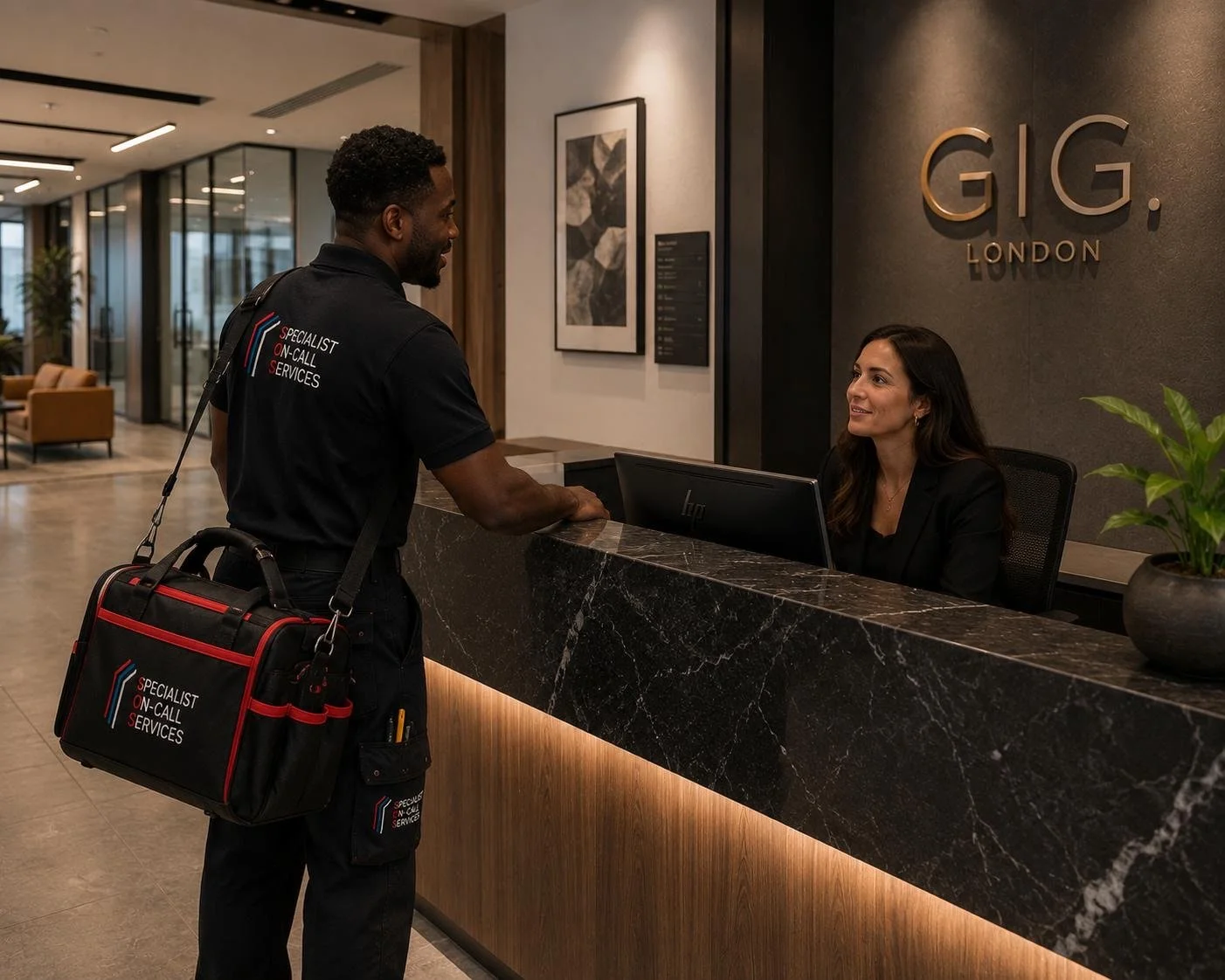
Reactive Work
Each trade below covers three kinds of work
Emergency
Compliance
Planned
Electrical
Faults, repairs, alterations and compliance work, in homes, offices and commercial premises.
Gas
Boiler faults, servicing and gas safety work, always attended by a Gas Safe registered engineer.
Plumbing
Leaks, blockages and general plumbing repairs, in domestic and commercial settings.
Drainage
Blocked or damaged drains, attended and resolved as a callout.
General repairs
Day-to-day maintenance and small jobs that don't need a full project.
Planned & compliance: landlord and managing agent obligations
These are legal obligations rather than optional repairs, planned to a statutory timetable rather than triggered by a fault, so they sit in their own clearly labelled section rather than inside each trade above. Managing a portfolio, or a single high-value address? Get in touch to discuss a scheduled compliance arrangement across multiple properties.

Gas Safety Certificate (CP12)
Landlords with a gas appliance in a tenanted property are legally required to renew this certificate every 12 months, issued by a Gas Safe registered engineer. A copy must go to the tenant, and non-compliance carries significant fines.
Enquire
Electrical Installation Condition Report (EICR)
Landlords in England must have an EICR carried out at least every five years, or at each change of tenancy. C1 means danger is present and must be addressed before a satisfactory certificate can be issued; C2 means a fault is potentially dangerous and needs urgent remedial work; C3 is a recommendation for improvement and doesn't block a satisfactory certificate; FI means further investigation is needed.
Enquire
PAT testing
Portable appliance testing confirms electrical appliances remain safe for continued use. It's required annually for furnished rental properties and commercial premises.
Enquire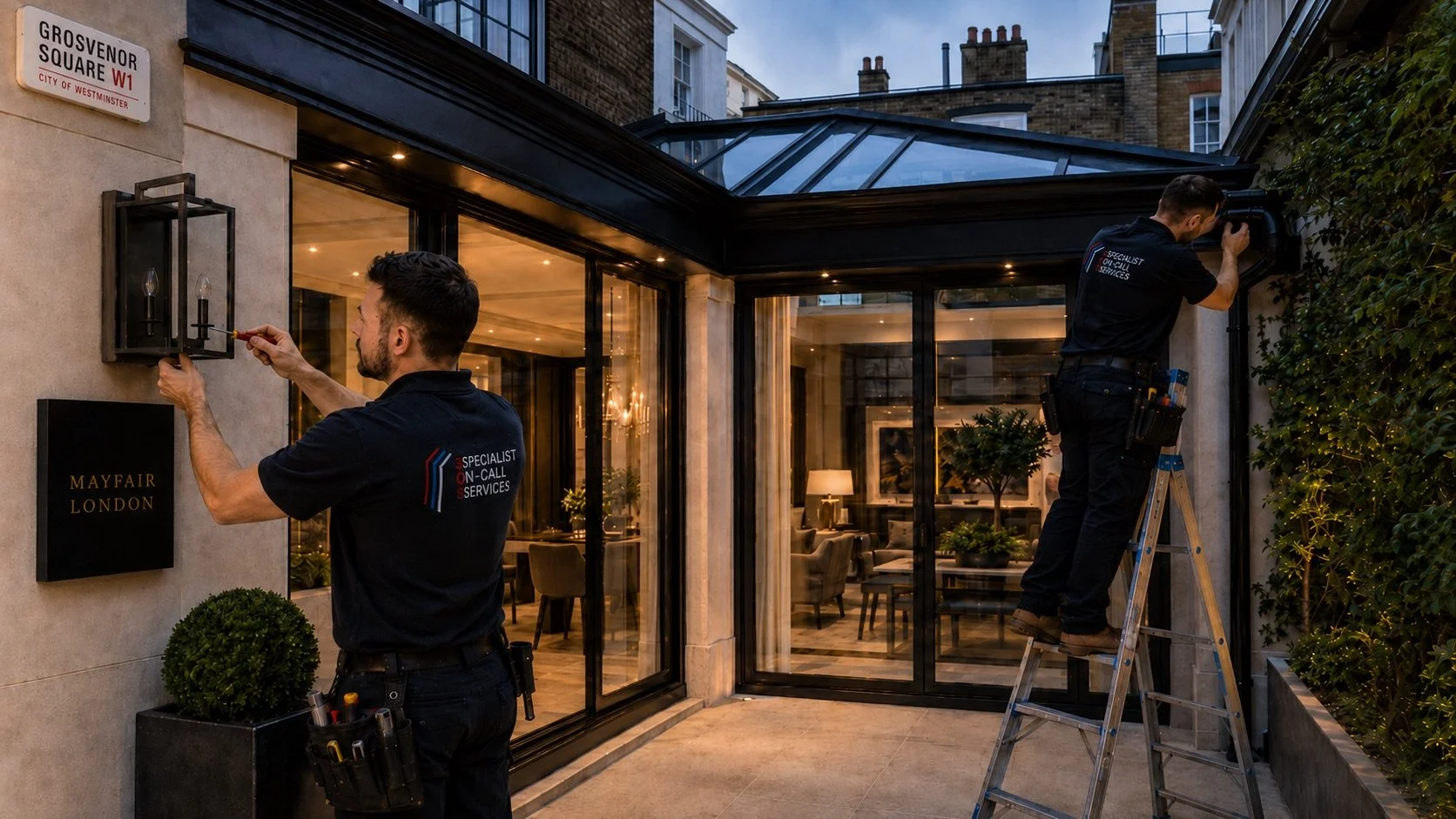
Central London
The standards we
work to
Every trade we appoint holds the registration required for their field: Gas Safe for gas, NAPIT or NICEIC for electrical, and the equivalent elsewhere. Only accredited people go on site, whether that site is a family home or a commercial premises mid-fit-out. The appointment, coordination and accountability for every job sit with SOS.




What happens when you call
Call or send an enquiry
Tell us what's happened.
We confirm who's coming
The right accredited specialist for the job, not a queue.
The job is attended
As a callout, for a specific fault, rather than scheduled as a project.
You know who to call
If anything's outstanding, it's the same point of contact, not a new number.
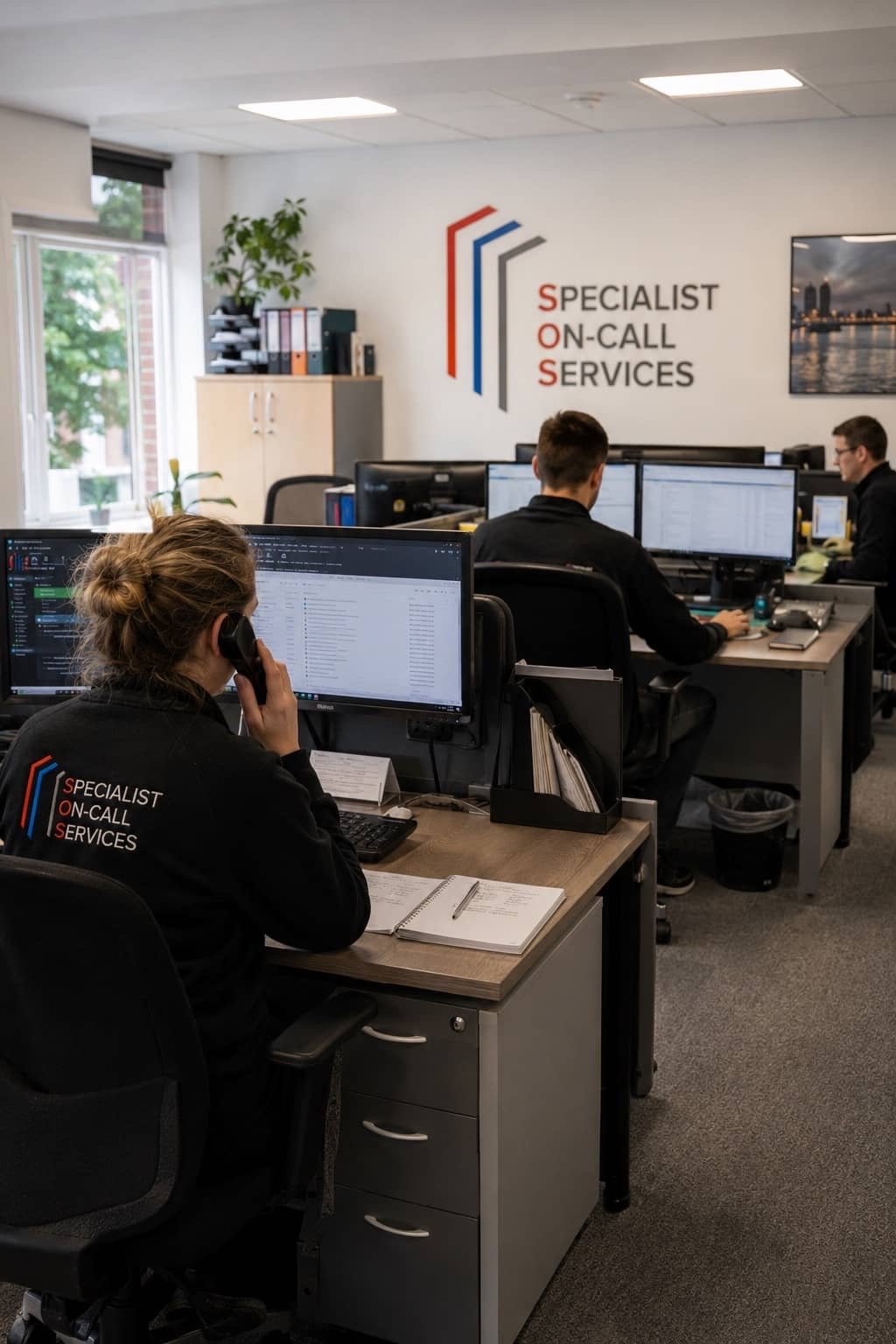
Out of hours, certification and charging
Out of hours
SOS holds relationships with engineers and contractors able and willing to attend out of hours.
Certification and paperwork
Where notifiable work is involved, you will receive the certificate, once the work is complete.
FAQs
-
Call 020 3376 1921 and we'll confirm immediately whether we cover your postcode.
-
There is no call-out fee.
-
Overnight, Sundays and bank holiday emergency call outs are charged at twice our standard hourly rate.
-
We aim to be with you within the hour depending on current work flow.
-
Yes, we can issue a written report for insurance or landlord purposes on request.
-
If it's safe to do so, isolate anything obviously connected to the fault and call us. A recurring trip usually points to a fault that needs an electrician, rather than repeated resetting.
-
Yes. It's a legal requirement, renewed at least every five years or at each change of tenancy, and issued by an approved contractor.
-
C1 means danger is present and must be fixed before a satisfactory certificate can be issued. C2 means the installation is potentially dangerous and needs urgent remedial work. C3 is a recommendation for improvement and doesn't block a satisfactory certificate. FI means further investigation is needed.
-
It confirms electrical appliances remain safe for continued use, and it's required annually for furnished rental properties and commercial premises.
-
Yes, if there's a gas appliance in a tenanted property. It's renewed every 12 months by a Gas Safe registered engineer, with a copy given to the tenant.
-
It's the industry name for a Gas Safety Certificate: the record that a Gas Safe registered engineer has checked a property's gas appliances and confirmed they're safe.
-
That depends on its age, the cost of the part, and whether repair remains economical. We'll advise honestly once we've seen it, rather than defaulting to a replacement quote.
-
A power flush clears sludge and debris from a heating system so radiators heat evenly and the boiler runs efficiently. Signs to look for: cold spots on radiators, a noisy or slow-heating boiler, or discoloured water when bled. Get in touch and we'll advise.
-
Isolate the water at the stopcock if you can reach it safely, and call us straight away. We'll prioritise attendance accordingly.
-
In most cases, yes.
-
A general repair is a single fault or small job attended as a callout. Anything larger, a refurbishment, an extension or a fit-out, sits on Project Management. If you're not sure which yours is, call and we'll tell you.